Every species here is photographed on the lake or on the property. This is not a list of what might be around — it is what is there.
The lake is not natural: the 1976 dam flooded some 350 km² of forest, and the dead trees were left standing in the water. That graveyard of trunks is now a perch and a fishing shelter — it is why so many fish-eating birds concentrate here.
The ones you see often
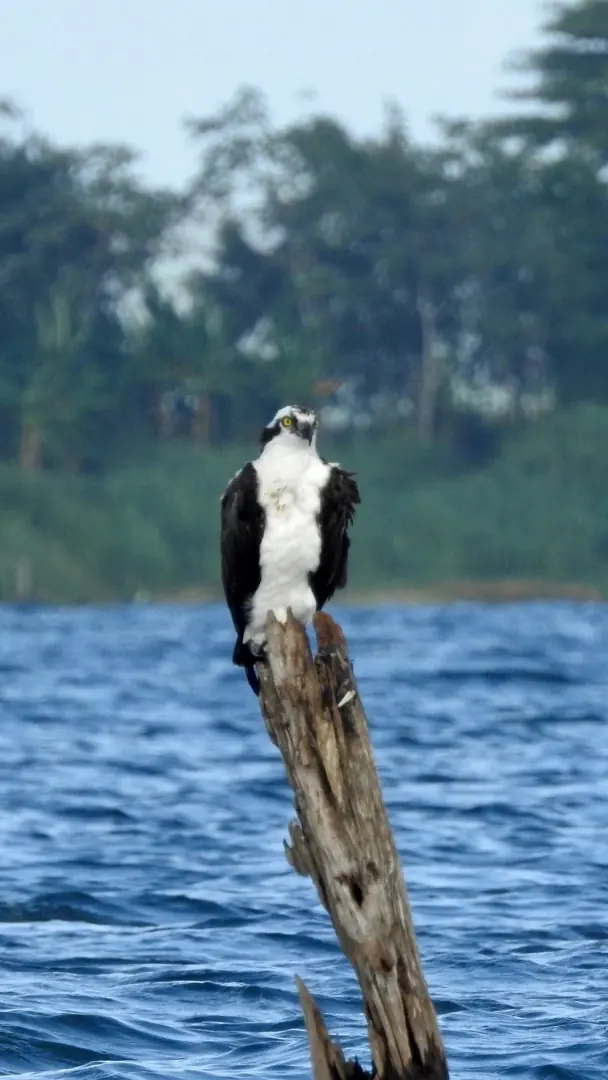
Osprey
Pandion haliaetus
The one you see on the dead trunks. It hunts by dropping feet-first into the water, and its outer toe reverses to grip the fish. Many of the ones here are not residents: they come down from North America for the winter and head back in spring.
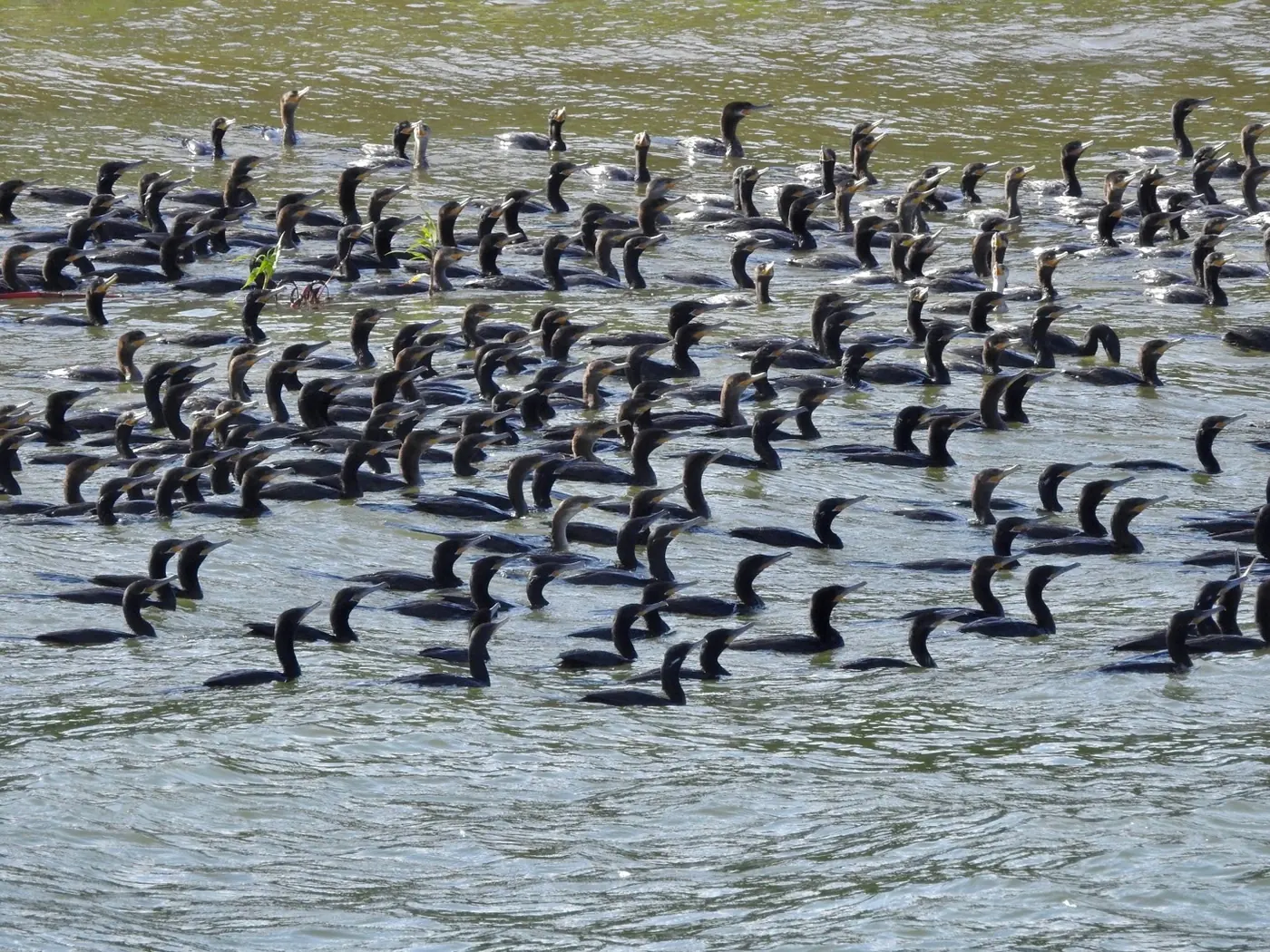
Neotropic cormorant
Nannopterum brasilianum
The lake’s most striking sight. They fish as a flock, herding the fish into shallow water together, then stand on the trunks with wings spread to dry: their feathers are not waterproof, and that is exactly why they dive so well.
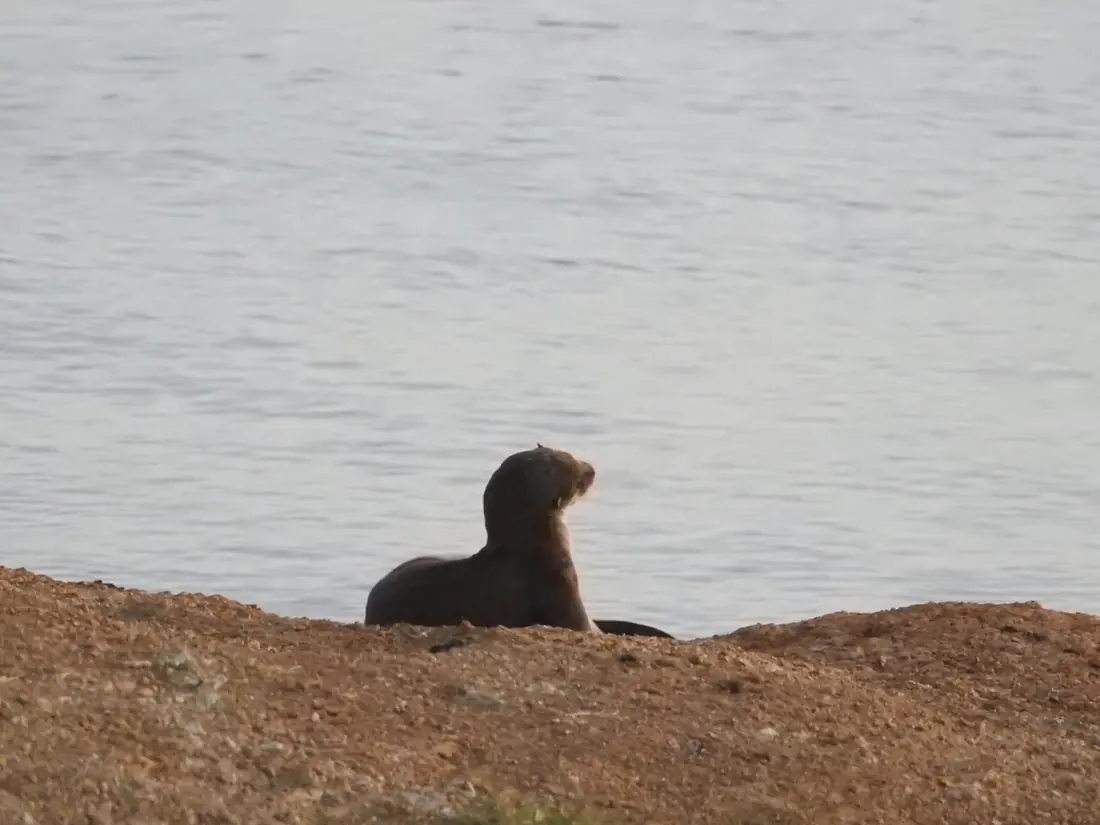
Neotropical otter
Lontra longicaudis
Solitary and most active at dawn and dusk, which is when you have the best chance of seeing one. It lives in rivers and lakes from Mexico to Argentina, and its presence is a good sign: it does not stay where the water is polluted.
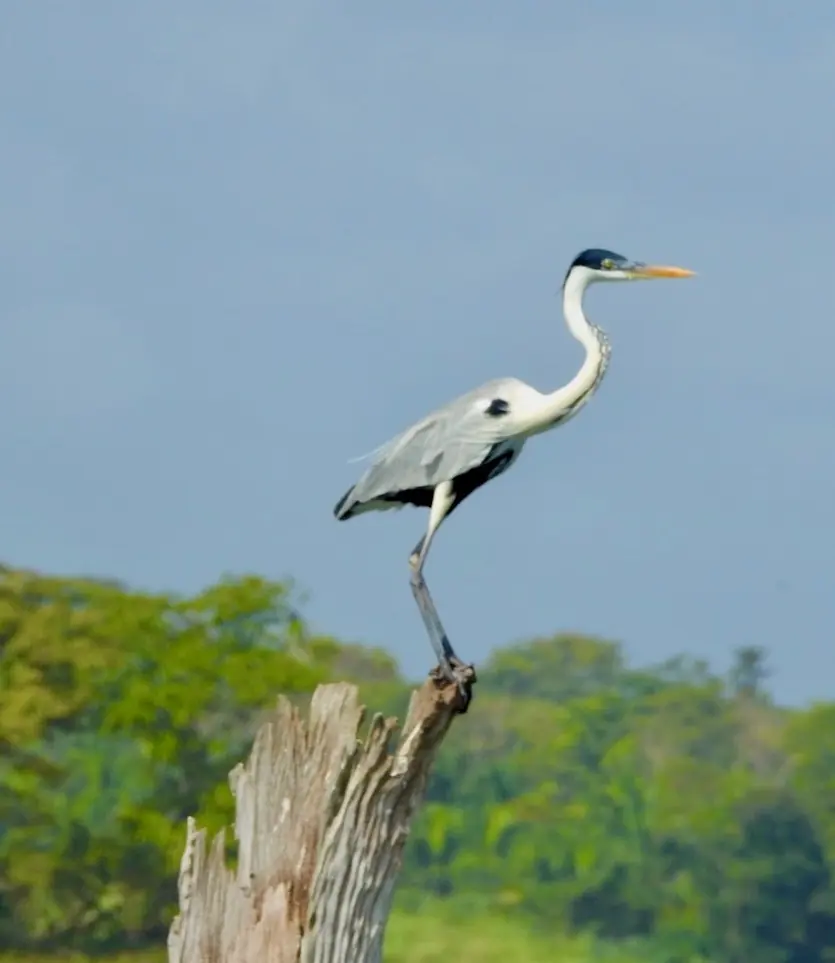
Heron
It hunts the opposite way to the osprey: it stands motionless in the shallows, sometimes for minutes, then strikes with its bill. On the lake it uses the trunks as a lookout.
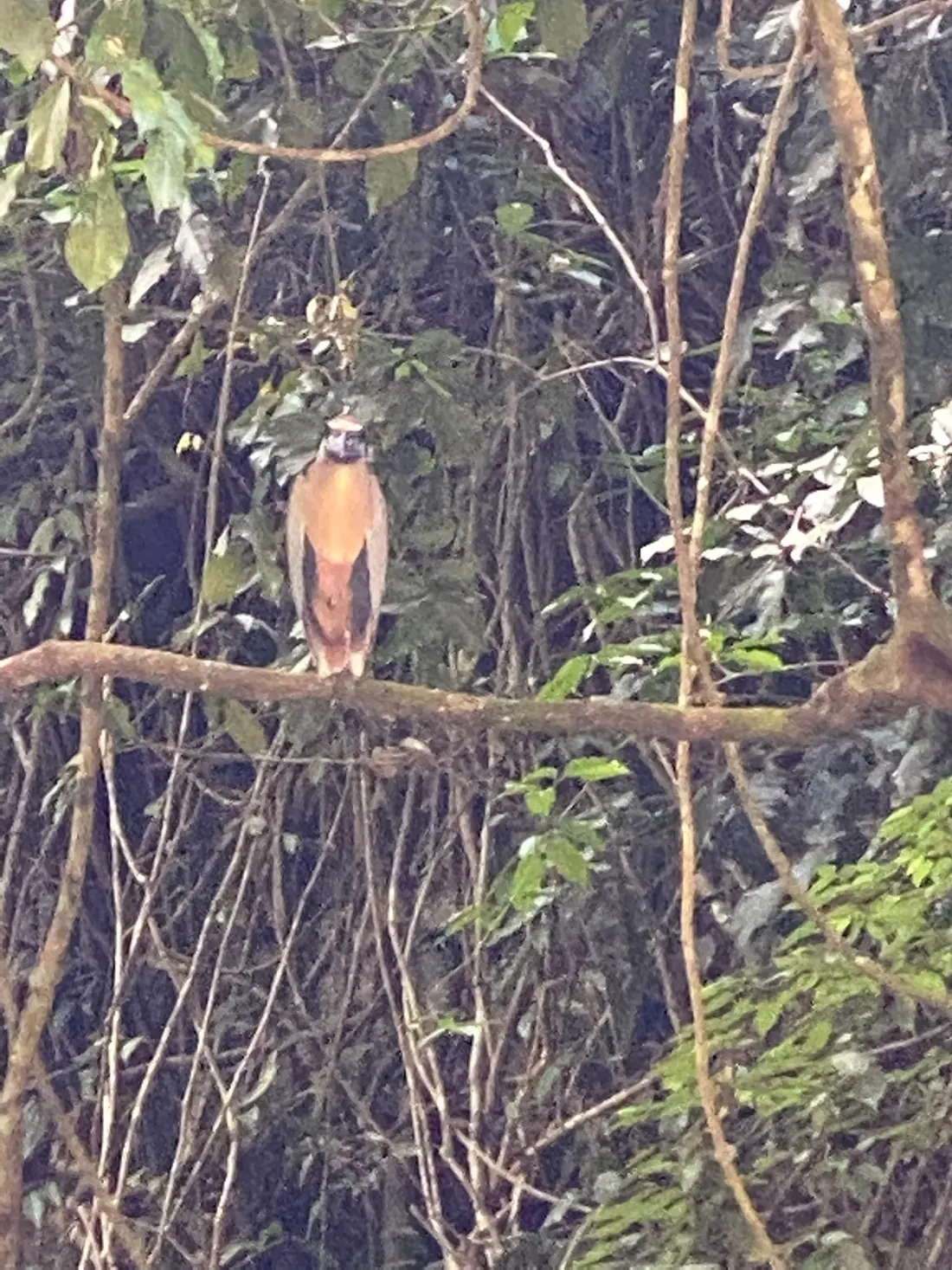
Unidentified bird of prey
Photographed in the canopy, on the property. It is not identified yet, and we will not name it until someone qualified confirms it.
This list was built from the photo archive and has NOT been validated by anyone with ornithological expertise. Two misidentifications already turned up on the first pass (an osprey catalogued as a boat-billed heron, and a bird of prey as a monkey). Publishing the wrong species on a site that positions itself as an ecolodge is spotted by any birding enthusiast, and it costs credibility with exactly the audience this content is meant to attract. Validate before publishing.
The cormorant flocks
At certain times of year the lake fills with hundreds of cormorants fishing at once. It is the most striking natural spectacle here, and it happens in plain view from the boat.
About the caiman
There are caimans in the lake. Do not enter the water outside the areas the guides point out. The Tigre River and the marked kayak zones are safe, but the rule is simple: ask before you swim.